Faculty of Health Sciences: Thirteen years of growth and transformation

Foreword:
Over the past 45 years, the University of Macau (UM) has continuously adapted its academic structure to reflect the evolving needs of society and the advancement of knowledge. To address increasingly complex technological and societal challenges, UM will restructure the Faculty of Health Sciences (FHS) and the Faculty of Science and Technology. Starting from 1 August 2026, the two faculties will be reorganised into four new entities: the Faculty of Medicine, the Faculty of Information Science and Computing, the Faculty of Engineering, and the Faculty of Science. In addition, UM will establish a new Faculty of Design. This initiative is not simply an organisational restructuring, but a comprehensive and forward-looking institutional reform. A new academic framework—built around the integration of medicine, engineering, information science, and intelligent technologies—is beginning to take shape. In this article, we look back on FHS’s journey—from its founding to its dynamic growth. By highlighting the faculty’s achievements in talent cultivation, scientific research, and the translation of research into practical application, we reflect on the path it has taken and look ahead to its strategic vision as it transitions into the Faculty of Medicine.
FHS was established in 2013, at a pivotal moment when UM was preparing to relocate to its campus on Hengqin Island. As the first faculty to move to the new campus, FHS played a pioneering role in shaping the university’s development and laid the foundation for a comprehensive ‘big health’ strategy serving Macao and the surrounding region. Since its inception, FHS has steadily promoted interdisciplinary integration and strengthened clinical collaboration, while continuously enhancing its systems for talent development and research innovation. Through these sustained efforts, the faculty has built a strong foundation for continued growth. In 2026, as part of UM’s broader restructuring to establish five science and technology faculties, FHS will be reconstituted and expanded as the Faculty of Medicine. This transition marks the next stage in the university’s long-term commitment to advancing medical education and research.
Laying the foundations together
Since its inception, FHS has pursued a clear and consistent mission: to advance cutting-edge biomedical research while cultivating health science professionals with a global outlook, strong professional expertise, and a deep sense of social responsibility. In the faculty’s early days, resources were limited. Shortly after its establishment, staff set up a temporary office in a corner of the old campus and shared laboratory space with the UM Institute of Chinese Medical Sciences. In February 2014, as the first faculty to relocate to the Hengqin campus, FHS moved into its own dedicated teaching building and laboratories, marking the beginning of a new phase of development. In just over a decade, the faculty has built a comprehensive teaching and research system.

The Faculty of Health Sciences was the first faculty to relocate to the Hengqin main campus in early 2014 and has grown rapidly ever since
This rapid progress was made possible through close collaboration across the university. During FHS’s formative years, Ge Wei, vice rector and chair professor of UM, served as faculty dean and played a hands-on role in its establishment. He notes that biomedicine is a fast-evolving and highly competitive field, with frequent upgrades in research equipment and time-sensitive procurement of specialised materials. To foster an open, innovative, and sustainable academic environment—while fully complying with Macao’s legal and financial regulations—UM’s administrative departments invested considerable effort in refining procedures and ensuring the smooth operation of large-scale instruments and shared facilities, including through mechanisms such as the Administrative Plan for Development Investments and Expenditures (PIDDA).
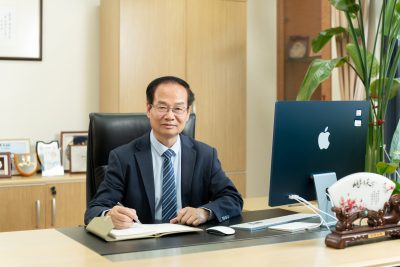
Prof Ge Wei
Chuxia Deng, a leading life scientist and current dean of FHS, emphasises that the faculty’s major research equipment and animal research facilities have been built to international standards. An internal sharing mechanism has been established to support high-level interdisciplinary research. FHS has also developed four core facilities—the Animal Research Core; the Bioimaging and Stem Cell Core; the Genomics, Bioinformatics and Single-Cell Analysis Core; and the Proteomics, Metabolomics and Drug Development Core—alongside seven specialised research platforms, including the Cancer Bank and Blood Bank, the Multi-Omics Technology Platform, the Big Data Analysis Platform, the Drug Development Platform, the Drug Sensitivity Testing Platform, the Nanomaterials Platform, and the Animal Model Platform. From its initial establishment to the development of full bench-to-bedside capabilities, FHS has significantly expanded the scope and depth of both its teaching and research.
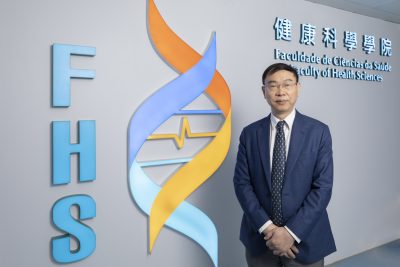
Prof Chuxia Deng
A distinctive approach to academic and talent development
Since its establishment, FHS has adopted a distinctive academic approach. It is neither a traditional life sciences faculty nor a conventional clinical medicine faculty. Instead, it has pursued a model grounded in the basic sciences and oriented toward clinical application. This approach is reflected in its curriculum. Course titles such as ‘General and Clinical Microbiology’, ‘Endocrinology and Metabolic Diseases’, and ‘Stem Cell Biology and Regenerative Medicine’ highlight the faculty focus on understanding biological processes and disease mechanisms at the molecular and cellular levels, while incorporating bioinformatics and big data analysis. At the same time, clinically relevant concepts and translational perspectives are woven throughout the curriculum, creating a framework that bridges basic research and clinical practice.
When FHS was established, it offered only a PhD programme in Biomedical Sciences, enrolling 10 students. Over time, the academic offerings expanded steadily. By 2019, the faculty had developed a three-department structure comprising Biomedical Sciences, Pharmaceutical Sciences, and Public Health and Medicinal Administration. In the 2025/2026 academic year, FHS offers two doctoral programmes, two master’s programmes, and three bachelor’s programmes, with enrolment totalling 480 PhD students, 60 Doctor of Public Health students, 140 master’s students, and 360 bachelor’s students.
Beyond the classroom, students are actively engaged in cutting-edge research in areas such as precision oncology, translational medicine, multi-omics, big data analytics, and drug development. They have become a vital driving force behind the faculty’s research and innovation. Prof Deng notes, ‘Many doctoral students publish first-author papers in leading international journals such as Nature Communications, Advanced Materials, Molecular Cancer, and Drug Resistance Updates during their studies. It is particularly encouraging to see students who initially lacked interdisciplinary backgrounds grow into independent researchers capable of integrating clinical questions, multi-omics data, and experimental validation.’ He adds that graduates have gone on to join leading research institutions and the global biopharmaceutical industry, translating their rigorous academic training at FHS into practical expertise.
Over time, FHS has evolved from providing solid professional training to nurturing high-level academic and research leaders. It has become an important hub for cultivating internationally competitive medical and scientific talent.
Research excellence and global standing
In 2020, UM received approval to establish the Ministry of Education Frontiers Science Center for Precision Oncology, University of Macau (FSCPO)—the first, and currently the only, centre of its kind in Hong Kong and Macao. The establishment of the centre marked a major milestone in the development of both FHS and the university as a whole.
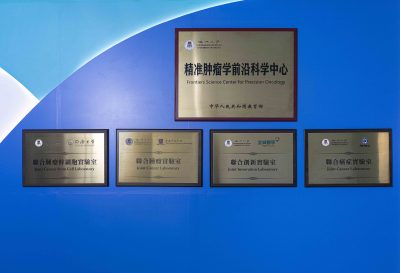
In 2020, UM received approval from the Ministry of Education of China to establish the Frontiers Science Center for Precision Oncology, marking a new stage in FHS’s development in precision oncology research
As a national-level research platform, FSCPO has enabled FHS to set more ambitious goals and adopt a more strategic approach to precision oncology research, propelling the faculty into a new stage of innovation driven by major scientific challenges and platform-based, systematic approaches. According to Prof Deng, the centre reflects national recognition of UM and FHS, representing a significant leap in the faculty’s research strength and academic standing. It has also enhanced the faculty’s overall research capacity.
Over the past 13 years, FHS scholars have published more than 2,850 academic papers, many in leading journals such as Advanced Materials and Science Immunology, accumulating over 82,000 citations. The faculty has secured more than 80 patents and obtained funding for approximately 460 competitive research projects. In 2022, the faculty was awarded a grant under the National Key R&D Program, becoming the first institution in Macao to receive this funding. Through the development and integration of its seven major research platforms, FHS has evolved from focusing on single-mechanism studies to advancing multi-omics integration, AI-assisted analysis, and the translation of precision medicine into clinical application. As a result, the faculty’s international visibility in oncology and precision medicine has increased significantly.


FHS’s laboratory facilities have evolved from primarily manual operations to automated systems
Among the 16 research fields in which UM ranks in the top 1% of the Essential Science Indicators (ESI), clinical medicine, psychiatry/psychology, and biology & biochemistry are areas to which FHS has made significant contributions. These disciplines also perform strongly in major international rankings, including those published by Quacquarelli Symonds (QS), Times Higher Education (THE), and U.S. News & World Report.
FHS’s advanced research facilities and rigorous academic standards have attracted nearly 100 full-time technical staff members and postdoctoral fellows, forming a multi-tiered talent structure that includes leading scholars, young principal investigators (PIs), postdoctoral researchers, and technical specialists. This structure has significantly strengthened the faculty’s research capacity and sustained its momentum in innovation. Among its nearly 60 faculty members, 12 are ranked among the top 2% of scientists worldwide, including six listed in the career-long category, underscoring the faculty’s strong academic standing.

Twelve FHS faculty members are ranked among the world’s top 2% of scientists
Accelerating clinical translation and innovation
Over the years, FHS has maintained close collaboration with the Macao Health Bureau and local hospitals. More recently, the faculty established a joint clinical medicine research centre with the Islands Healthcare Complex – Macao Medical Center of Peking Union Medical College Hospital (Macao Union Hospital). It has also launched an annual joint symposium with Macao Union Hospital, helping to foster a productive cycle between basic research and clinical application. Internationally, FHS actively engages in joint research projects, academic exchanges, and the co-supervision of postgraduate students with leading universities and research institutions worldwide. These partnerships have advanced systematic research in precision medicine and led to collaborative achievements such as the development of a patient-derived organoid (PDO) platform, which has been translated into clinical practice through hospital-based studies.
At the same time, FHS has achieved a series of significant breakthroughs in biomedicine and precision medicine. These include the establishment of a living tumour tissue and organoid biobank; the identification of the lymphatic system as a major pathway for distant breast cancer metastasis; the development of AI- and big data-driven analytical technologies; the discovery of new immunosuppressive pathways and the proposal of innovative therapeutic strategies such as bispecific antibodies; the pioneering of tumour pyroptosis and cancer vaccine strategies based on carbon dots and photocatalysis; and the elucidation of the molecular and metabolic mechanisms underlying tumour drug resistance, along with corresponding combination therapy approaches. Together, these achievements are strengthening Macao’s position as an emerging hub for medical innovation in the Guangdong-Hong Kong-Macao Greater Bay Area.
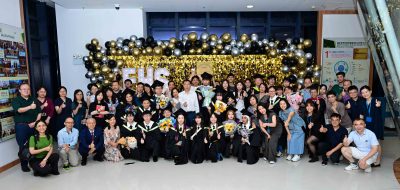
FHS has seen steady growth in its graduates, cultivating a strong pool of professionals
Strategic transformation and a renewed mission
Over the past 13 years, FHS has built a collaborative institutional framework, a distinctive academic identity, and a strong research foundation. These achievements have not only driven the faculty’s development but also laid the groundwork for its reorganisation as the Faculty of Medicine this August, creating new opportunities for UM’s future growth. This transition represents more than an administrative change; it reflects a strategic response to evolving societal needs and a renewed sense of responsibility.
The establishment of the Faculty of Medicine will broaden UM’s academic landscape with the addition of the Department of Clinical Medicine, the Department of Medicinal Food and Nutrition Sciences, and the Department of Dentistry. It will also introduce a joint clinical medicine programme with the University of Lisbon in Portugal. The new faculty is expected to enrol approximately 4,000 students. According to Prof Ge, this collaborative model will help ensure that the Faculty of Medicine aligns with international standards in curriculum design, teaching methods, and quality assurance, further strengthening UM’s global competitiveness.
Looking ahead, Prof Ge and Prof Deng express their hope that the Faculty of Medicine will carry forward FHS’s long-standing commitment to basic research while strengthening the full continuum from fundamental discovery to clinical application and industry translation. In doing so, they believe the new faculty will contribute to public health and high-quality development both regionally and nationally, further advancing UM’s role in serving society.
Video

Chinese Text: Stella Kuan, UM Reporter Che Xiaonan
Chinese Editor: Gigi Fan
English Translation: Bess Che
Photo: Editorial Board, Jack Ho, with some provided by interviewees
Video: Hasen Cai, David Tong, Sam Chan
Source: My UM Issue 153